A single day in the Ngorongoro Crater delivers more concentrated wildlife drama than most people encounter in a lifetime of travel. The question is not whether a day trip is worth it. The question is whether you are ready for it.
Introduction
Not every traveller to Tanzania has the luxury of unlimited time. Itineraries are constrained by annual leave entitlements, connecting flight schedules, school holiday windows, and the competing demands of a multi-destination journey that may include the Serengeti, Zanzibar, Kilimanjaro, and half a dozen other extraordinary places. For these travellers — and for the many more who simply want to understand what a focused, single-day visit to one of the world’s great natural wonders can realistically deliver — the Ngorongoro Crater day trip is one of Africa’s most compelling and rewarding wildlife propositions.
A well-planned Ngorongoro crater day trip is not a compromise. It is a specific and highly effective format for experiencing one of the most wildlife-dense ecosystems on Earth, executed with the precision and early-start discipline that the limited hours of a single day demand. Within twelve hours — from the first light descent to the late-afternoon ascent — a dedicated day trip visitor can cover the full ecological range of the crater floor, encounter all of the Big Five with a realistic probability that few other single-day wildlife experiences in Africa can match, and return to the rim with a collection of memories and images that most travellers describe as among the finest of their safari journey.
This guide provides everything you need to maximise a Ngorongoro crater day trip — from the logistics of descent timing and route planning to the wildlife expectations, photography strategies, and practical preparations that separate an extraordinary crater day from a merely adequate one.
Why the Ngorongoro Crater Rewards a Day Trip
The Ngorongoro Crater’s exceptional suitability for a day trip format rests on a set of ecological and geographical characteristics that distinguish it from every other major safari destination in Tanzania.
Contained Geography
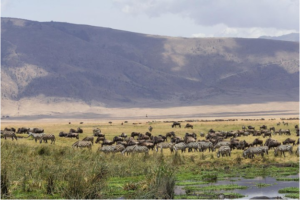
At 19 kilometres across and 260 square kilometres in total area, the Ngorongoro Crater floor is large enough to provide a genuinely wild and spacious wildlife experience but compact enough to be meaningfully explored within a single long day. A vehicle that departs the descent gate at dawn and manages its time well across the crater’s key habitat zones — the short-grass plains, the Lerai Forest, the Lake Magadi shoreline, and the swamp areas — can cover all of the most productive wildlife circuits without rushing and without sacrificing the extended observation time that quality wildlife encounters require.
In the Serengeti, by contrast, the park’s 14,763 square kilometres means that a single day provides only the most superficial engagement with a fraction of the ecosystem. The Ngorongoro’s compactness is not a limitation — it is the source of its extraordinary day trip potential.
Year-Round Wildlife Density
Unlike the Serengeti, whose wildlife distribution shifts dramatically with the seasonal movement of the Great Migration, the Ngorongoro Crater maintains a permanent, year-round resident wildlife community whose density is essentially constant regardless of season. The crater’s enclosed geography and permanent water sources — springs, the Lake Magadi system, the Lerai swamp — mean that the approximately 25,000 to 30,000 large animals that inhabit the caldera floor are present in comparable concentrations in every month of the year.
This year-round reliability transforms the day trip calculation. A Ngorongoro crater day trip in March delivers essentially the same wildlife density as one in August — a consistency that is simply unavailable at any other major Tanzania safari destination and that makes the crater the single most reliably productive single-day wildlife experience in East Africa.
Proximity to Other Northern Circuit Destinations
The Ngorongoro Crater sits at the geographical heart of Tanzania’s northern circuit, within practical day-trip range of the circuit’s other major destinations. From Karatu — the gateway town 20 kilometres outside the Conservation Area entrance — the descent gate is 45 minutes by road. From the Serengeti Naabi Hill Gate, the Conservation Area is approximately 2 hours. From Arusha, the drive is approximately 3.5 to 4 hours. This central positioning means that the Ngorongoro crater day trip integrates naturally into virtually any northern circuit itinerary structure, functioning as a standalone day excursion from a Karatu or rim base or as a connecting day between Serengeti and Tarangire.
Planning the Perfect Ngorongoro Crater Day Trip
The Golden Rule: Arrive at the Gate at Opening Time
The single most important logistical decision in any Ngorongoro crater day trip is descent timing. The crater floor descent gate opens at 7:00 AM, and arriving at this gate at or before opening time is not simply recommended — it is the difference between a very good day and an extraordinary one.
The reasons are compounding. The first two hours after dawn — when the light is gold and low, the air is cool, and the crater’s predators are at peak activity — are the most wildlife-productive hours of the entire day. Lion prides are alert and potentially hunting. Cheetahs are on the move. The crater floor has the quality of held breath, as if the landscape knows that the day’s great business is about to begin. Missing these hours by arriving late to the gate forfeits the most valuable window of the entire day trip.
By mid-morning, as the temperature rises and the predators retreat to shade, the crater floor shifts into its mid-day register — still extraordinary, but quieter and less dramatically active. Arriving at the gate at 9:00 or 10:00 AM instead of 7:00 means spending the most productive wildlife hours on the road rather than on the crater floor. It is the single most consequential planning error a day trip visitor can make.
Achieving a 7:00 AM gate arrival from Karatu requires departing by 6:00 AM. From a Serengeti camp at the Naabi Hill Gate, a 4:30 to 5:00 AM departure is necessary. From Arusha or the northern circuit’s more distant points, the logistics may require a pre-crater night in Karatu to make the timing workable.
Building the Day’s Wildlife Circuit
A well-structured Ngorongoro crater day trip follows a route that covers all of the crater’s major habitat zones and maximises encounter probability with its full wildlife community. While exact routing is appropriately the domain of your experienced guide — who will adjust the day’s circuit based on current wildlife intelligence — the following framework provides a useful orientation.
Early morning (7:00 to 10:00 AM): The priority is the open short-grass plains of the central and eastern crater floor, where predators are most active in the cool of the morning. Lion prides are typically moving or hunting in this window, and cheetahs on the open plains are most visible and most behaviourally active before the heat drives them to shade. The guide should have current intelligence on pride and coalition locations from the ranger network, and the early hours should be dedicated to finding and staying with active predator sightings.
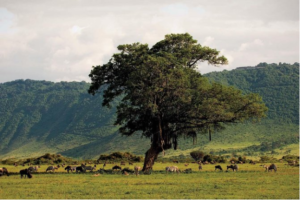
Mid-morning (10:00 AM to 12:30 PM): As predator activity slows, the circuit shifts to the Lerai Forest — the remarkable grove of yellow-barked fever trees that lines the crater’s freshwater spring system and provides the preferred habitat of the crater’s large bull elephants. Encounters with these magnificently tusked animals in the dappled light of the forest edge are among the crater’s finest photographic experiences. The forest’s birding is exceptional, and the swamp areas adjacent to the forest support hippo, waterbirds, and the buffalo herds that graze the forest margins.
Midday (12:30 to 2:00 PM): The Ngorongoro Conservation Area regulations permit picnicking at designated sites on the crater floor — a genuinely memorable lunch stop with wildlife grazing and drinking within view, and the extraordinary experience of eating outdoors in the middle of one of Africa’s greatest wildlife landscapes. The crater’s hippo pool at the designated picnic site is reliably productive year-round, with hippos visible at close range from the vehicle and the surrounding short grass frequently populated by bird life and small mammals.
Afternoon (2:00 to 5:30 PM): As temperatures begin to ease in the late afternoon, predator activity resumes and the circuit returns to the plains. The Lake Magadi shoreline is worth visiting in the afternoon for its flamingo, waterbirds, and the extraordinary visual quality of the alkaline lake light in the late afternoon sun. The final two hours before the 6:00 PM ascent deadline are the second golden activity window of the day — lions becoming active again, cheetahs resuming movement, and the crater light turning warm and dramatic as the sun descends toward the rim.
Rhino Strategy on a Day Trip
For many crater day trip visitors, the black rhinoceros is the most coveted encounter — and the one that requires the most deliberate strategic attention within the constraints of a single day. With a crater population of only 20 to 30 individuals and animals that can disappear into the Lerai Forest for extended periods, a rhino sighting is not guaranteed on any single day. The strategy that maximises probability within a day trip format includes: prioritising the rhino search during the early morning circuit when animals are most likely to be on the open plains away from forest cover; working with a guide who has specific morning intelligence on rhino locations from the ranger network; and being prepared to dedicate a significant portion of the mid-morning circuit to the areas of the crater floor most frequently used by rhino individuals.
Day trip visitors should understand that a rhino sighting is a genuine possibility — many day trip visitors do encounter rhinos — but that the probability is substantially lower than for a two-day crater visitor. This reality should be factored into expectations rather than into disappointment.
What to Bring on a Crater Day Trip
Essential Kit
Binoculars are not optional on a Ngorongoro crater day trip — they are essential. The crater’s compact geography means that animals are frequently visible at medium distances across the open plains, and binoculars transform partially obscured silhouettes into fully identifiable species. A quality pair of 8×42 or 10×42 binoculars significantly increases the quantity and quality of wildlife encounters throughout the day.
Camera equipment should be matched to your primary wildlife interest. A telephoto lens of 300 to 500mm is standard for predator and bird photography at crater game drive distances. A wider lens (70-200mm) is useful for elephant and landscape photography in the Lerai Forest and for capturing the scale of the caldera from the crater floor.
Warm layers are essential for the early morning descent — crater rim temperatures at 6:00 AM can be remarkably cold, and the descent road is exposed. A fleece or light jacket and a hat are practical necessities regardless of the broader Tanzania travel season.
Snacks and water should be packed from your accommodation, as resupply options on the crater floor are non-existent. Pack more water than you think you will need — crater floor temperatures can be surprisingly warm by mid-morning, and a full day in an open vehicle is more physically demanding than it appears.
Photography Considerations
The Ngorongoro Crater’s combination of open terrain, habituated wildlife, and exceptional light creates outstanding photography conditions for the early morning and late afternoon hours of a day trip. The crater’s compactness means that vehicle positioning relative to subjects is particularly important — discuss photography priorities with your guide before descent so that vehicle placement at key sightings can be optimised for camera angles and light direction.
The midday light (10:00 AM to 2:00 PM) is the least photogenic period for wildlife photography in the crater, as the high overhead sun creates harsh shadows and flat colours. Experienced photographers concentrate their primary image-making efforts in the first two and last two hours of the day trip and use the mid-day hours for the Lerai Forest and hippo pool visits where ambient shade light is more forgiving.
Key Takeaways
- A Ngorongoro crater day trip is one of Africa’s finest single-day wildlife experiences — the crater’s contained geography, year-round wildlife density, and exceptional species diversity deliver concentrated encounter quality that multi-day visits to larger parks cannot match within a single day.
- Arriving at the descent gate at 7:00 AM opening time is the single most important logistical decision — the first two hours of the morning are the most wildlife-productive of the entire day, and late arrival forfeits the golden hours that define the finest crater experiences.
- A structured crater floor circuit covering the short-grass plains, Lerai Forest, hippo pool picnic site, and Lake Magadi shoreline provides coverage of the crater’s full habitat range and maximises encounter probability with its complete wildlife community.
- The black rhinoceros is a possibility on a day trip but is more reliably encountered over two crater days — guide intelligence from the ranger network and strategic early morning allocation to rhino-priority areas improve day trip rhino probability significantly.
- Year-round wildlife density makes the Ngorongoro crater day trip viable in every month of the year — unlike the Serengeti, the crater’s enclosed ecosystem maintains consistent animal concentrations regardless of season, making timing less critical than at any other northern circuit destination.
- Binoculars, warm early-morning layers, camera telephoto capacity, and packed snacks and water are the four practical essentials that most significantly affect day trip comfort and wildlife encounter quality.
- The Ngorongoro crater day trip integrates naturally into any northern circuit itinerary — from Karatu, Arusha, or a Serengeti camp — and functions as both a standalone highlight and as the ecological centrepiece of a broader Tanzania wildlife journey.
Questions & Answers
Q: How much does a Ngorongoro crater day trip cost? A: The cost of a Ngorongoro crater day trip includes several fixed fee components that apply regardless of tour operator or accommodation tier. The Ngorongoro Conservation Area entrance fee is approximately $70 to $80 per person per day for non-resident adults. The crater descent fee — charged per vehicle per descent — is approximately $200 to $300 per vehicle. A shared group tour day trip from Karatu or Arusha typically costs $300 to $500 per person inclusive of fees, transport, guide, and a packed lunch. A private vehicle day trip — with a dedicated guide and vehicle for your party alone — typically costs $500 to $900 per person depending on operator quality, departure point, and group size. Luxury private day trip programmes from crater rim lodges are priced higher and often include premium guiding, gourmet crater floor picnic setups, and specialist services. The crater descent fee represents a genuine conservation investment — it directly funds the ranger and anti-poaching programmes that protect the crater’s precious wildlife, including the black rhinoceros.
Q: Is a Ngorongoro crater day trip suitable for young children? A: Yes — with appropriate preparation and realistic expectations about pace. The crater day trip’s compact geography and extraordinarily abundant, easily visible wildlife make it one of the finest wildlife experiences available for children of any age. Young children respond to the Ngorongoro’s close-range elephant and buffalo encounters, the readily visible lion prides, and the spectacle of the flamingo-lined Lake Magadi with the kind of spontaneous wonder and engagement that parents find deeply rewarding. The practical considerations for families with young children include: packing sufficient snacks, water, and entertainment for a long vehicle day; selecting an operator willing to adjust the circuit pace to accommodate children’s energy and attention; and managing expectations about the rhino search — the patience required for a sustained rhino hunt may exceed young children’s tolerance. Private vehicle hire is strongly recommended for families with children under eight, providing the flexibility to adjust the day’s programme without affecting other passengers.
Q: What is the difference between a Ngorongoro crater day trip and an overnight crater safari? A: The primary differences are wildlife encounter depth, rhino probability, and the quality of the dawn and dusk experiences. An overnight crater safari — staying on the crater rim for one or more nights and making crater floor descents on each crater day — delivers the following advantages over a day trip: two or more separate descent days significantly increase rhino sighting probability; consecutive day intelligence allows the guide to build on the first day’s observations and follow up specifically on productive locations and individual animal sightings; the atmospheric quality of the crater at multiple dawn and dusk windows — the most wildlife-active and most photogenically beautiful periods — is accessible across both days; and the overall pace is more unhurried, allowing extended time at exceptional sightings without the pressure of a single-day gate closure deadline. For travellers with the itinerary flexibility to include two crater nights, the overnight safari is unambiguously the superior experience. For those with genuine time constraints, a well-executed crater day trip remains one of Africa’s finest single-day wildlife propositions.
Q: Can I do a self-drive day trip to the Ngorongoro Crater? A: The crater floor itself does not permit self-drive vehicles — all crater floor game drives must be conducted in registered tour operator vehicles driven by licensed, crater-certificated guides. This regulation exists for both wildlife safety and visitor protection reasons: the crater’s predators, including its large lion population and densely concentrated hyena clans, are habituated to tour operator vehicles in ways that make private vehicles potentially vulnerable, and navigation of the crater floor’s one-way descent and ascent roads requires knowledge and certification that self-drive visitors do not hold. The Conservation Area’s outer zones — including the crater rim road and the approach to Olduvai Gorge — are accessible by self-drive for visitors with appropriate 4WD vehicles and Conservation Area entrance permits, but the crater floor experience itself requires booking through a registered operator.
Q: What wildlife is most likely to be seen on a Ngorongoro crater day trip? A: On a well-planned crater day trip with an experienced guide, the following species can be expected with high probability: lions (near-certainty — the crater’s density ensures multiple pride encounters on most day trips), spotted hyenas (extremely common, frequently visible at kills, dens, or moving across the plains), Cape buffalo (enormous herds on the open plains and forest margins), wildebeest and zebra (year-round residents in large numbers), hippopotamus (reliably visible at the hippo pool picnic site), elephants (particularly bull elephants in the Lerai Forest), giraffes (present in small numbers in the woodland zones), cheetahs (regularly encountered on the open plains), golden jackals (extremely common), flamingos at Lake Magadi (when conditions are suitable), and an exceptional diversity of birds throughout the day. Leopards are present but rarely encountered on the crater floor. Black rhinoceros are possible but not probable on a single day — their encounter rate improves significantly with a two-day visit and expert guide intelligence on current individual locations.
Conclusion
The Ngorongoro crater day trip is, in the most literal sense, a race against the clock — but it is a race conducted in one of the most extraordinary environments on Earth, with a landscape of ancient volcanic grandeur and astonishing wildlife abundance as both the setting and the reward.
The discipline it requires — the early alarm, the pre-dawn drive to the gate, the structured circuit that balances coverage with lingering, the strategic attention to the rhino search within the available hours — is not the discipline of efficiency for its own sake. It is the discipline of respect for a place that deserves your full and organised attention. The Ngorongoro Crater has been here for three million years. It will accommodate a late start, a mid-morning arrival, and a hurried circuit. But it will not reward them with the experiences it reserves for those who come prepared, come early, and come ready to be genuinely present.
The visitors who arrive at the descent gate at 7:00 AM, descent road mist still clinging to the caldera walls, the first light turning the plains below from silver to gold, with a guide who knows where the lions were at midnight and where the rhino was at dawn — these are the visitors who come back changed. Who describe the Ngorongoro crater day trip not as a wildlife outing but as an encounter with something older and more complete than anything the ordinary world contains.

