Rwanda has become one of the world’s most respected destinations for Gorilla Safaris Rwanda Compact, safe, well organized and breathtakingly green, the country offers a mountain gorilla experience that is as easy to reach as it is moving. Within a few hours of landing in Kigali, you can be standing at the foot of the Virunga volcanoes, preparing to meet a gorilla family in the bamboo forest. This guide covers everything you need to plan gorilla safaris in Rwanda: where they happen, how a trek works, what to pack, when to go and why your visit supports conservation.
Why Choose Rwanda for Gorilla Safaris?
Rwanda’s appeal rests on a rare combination of strengths.
- Easy access. Volcanoes National Park lies roughly two to three hours by road from Kigali, so you can trek without long transfers.
- Strong conservation record. Decades of anti-poaching work, veterinary care and community partnership have helped mountain gorilla numbers recover.
- Safety and organization. Rwanda is widely regarded as one of Africa’s safest and best-run destinations, with clean cities and reliable infrastructure.
- Scenic variety. The “Land of a Thousand Hills” offers volcanoes, lakes, rainforest and rolling tea country in a small area.
- Short-trip friendly. Many travelers complete a gorilla trek in a long weekend, which suits busy schedules.
Rwanda generally charges a higher permit fee than neighboring Uganda, reflecting its focus on low-volume, high-value tourism that funds conservation and community development.
Volcanoes National Park: The Heart of Rwanda’s Gorilla Safaris
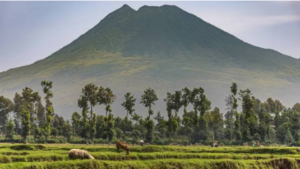
Gorilla trekking in Rwanda takes place in Volcanoes National Park, part of the greater Virunga Massif that also spans Uganda and the Democratic Republic of Congo. The park protects five of the eight Virunga volcanoes, including Karisimbi, Bisoke, Muhabura, Gahinga and Sabyinyo.
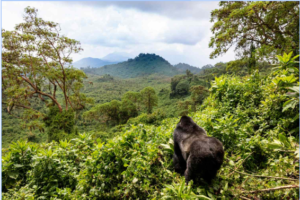
The habitat includes bamboo forest, montane rainforest and open volcanic slopes, and the scenery is often wrapped in morning mist. Rwanda has multiple habituated gorilla families, each visited by a single group of up to eight people per day. Families differ in size, personality and typical location, which affects how far you must hike.
Rangers usually assign trekkers to families at the morning briefing, taking into account fitness, age and preferences. If you want an easier trek, say so, because families that stay on lower slopes may require shorter, gentler hikes.
How a Gorilla Trek in Rwanda Works
- Early arrival and briefing. Trekkers gather at the park headquarters near Kinigi, enjoy cultural dance performances and receive a briefing on rules and safety.
- Family assignment. Guides divide visitors into small groups and match each to a gorilla family.
- Drive to the trailhead. Vehicles take you to the starting point, usually through villages and farmland.
- The hike. Trackers who have already located the family lead you through fields, bamboo and forest. The hike can take roughly one to four hours, depending on where the gorillas are.
- The encounter. Once you reach the family, you leave bags and walking sticks behind and approach quietly. You spend one hour observing the gorillas feed, play, groom and rest.
- The return. After the hour, you hike back and receive a certificate. Many visitors tip their guides, trackers and porters.
Fitness and Preparation
Gorilla trekking is physically demanding but achievable for most healthy travelers. Altitude, mud and slopes make the walk harder than it looks.
- Train with regular walks, hill climbs and stair work for several weeks before you travel.
- Break in waterproof hiking boots before the trip.
- Consider hiring a porter, who carries your daypack, steadies you on slippery sections and earns income that benefits local families.
- Pace yourself, drink water and tell your guide if you need a rest.
- Arrive a day early to acclimatize and recover from long flights.
What to Pack for Gorilla Safaris in Rwanda
- Waterproof hiking boots with good grip
- Long-sleeved shirts and long trousers in neutral colors
- A lightweight waterproof jacket or poncho
- Gardening gloves for gripping vegetation
- Gaiters or long socks to keep out mud and insects
- Insect repellent, sunscreen and a hat
- A camera without flash, spare batteries and a waterproof bag
- A refillable water bottle and light snacks
- Warm layers for cool mornings at altitude
Rules and Etiquette During the Encounter
Strict guidelines protect gorillas and visitors alike.
- Keep a distance of about seven meters from the gorillas.
- Speak softly and move slowly.
- Never use flash photography.
- Do not eat, drink or smoke near the animals.
- If a gorilla approaches, stay calm, avoid eye contact and follow your guide’s instructions.
- Cover your mouth if you cough or sneeze, and turn away from the gorillas.
- Do not trek if you are unwell, because gorillas are vulnerable to human diseases.
Best Time for Gorilla Safaris Rwanda
Trekking operates year-round, but conditions vary.
- Dry seasons (roughly June to September and December to February): Trails are firmer, hiking is easier and photography conditions are generally better. These are also the busiest months, so book early.
- Wet seasons (roughly March to May and October to November): The forest is lush and dramatic, crowds are thinner and some lodges offer lower rates. Trails are muddier and more slippery, so footwear matters.
Remember that volcanoes create their own weather. Rain and mist can arrive in any month, so pack for changing conditions.
Permits, Costs and Booking
A gorilla permit is required for every trekker, and Rwanda caps the number issued each day. Permit prices have been adjusted in the past and may change again, so confirm current fees with the Rwanda Development Board or your operator before budgeting. Beyond the permit, expect costs for accommodation, transfers, meals, tips and any additional activities.
Book six to twelve months ahead for peak seasons. A reputable tour operator can arrange permits, transport, lodging and add-ons, which simplifies planning considerably.
Extending Your Rwanda Safari
Many travelers pair gorillas with other experiences.
- Golden monkey tracking in Volcanoes National Park
- Dian Fossey hike to the site of her former research camp
- Nyungwe Forest National Park for chimpanzee tracking and the canopy walkway
- Akagera National Park for savanna wildlife, including lions, rhinos, elephants and giraffes
- Lake Kivu for relaxation, kayaking and lakeside views
- Kigali for the Kigali Genocide Memorial, art galleries, cafes and markets
Combining these destinations creates a varied itinerary of primates, savanna and culture in a single, compact country.
Conservation and Community Impact
Mountain gorillas remain endangered, but Gorilla Safaris Rwanda’s approach shows how tourism can protect wildlife. Permit revenue supports park management, ranger patrols and veterinary care, and a share is directed to communities living around the park for schools, clean water and health projects. This gives local people a direct stake in protecting the forest.
By following the rules, choosing responsible operators and spending locally, you help sustain a model of conservation that benefits both gorillas and people.
Key Takeaways
- Gorilla safaris in Rwanda take place in Volcanoes National Park, within a few hours of Kigali.
- Permits are limited and typically cost more than in Uganda, with prices subject to change, so confirm current rates.
- A typical trek includes a briefing, a hike of roughly one to four hours and one hour with the gorillas.
- Reasonable fitness, waterproof boots, gloves and layered clothing are essential.
- Strict rules on distance, noise, flash and health protect the gorillas.
- Dry seasons are easier underfoot, while wet seasons offer fewer crowds and lush scenery.
- Extending your trip with golden monkeys, Nyungwe, Akagera and Kigali creates a well-rounded itinerary.
- Permit fees and responsible travel support conservation and local communities.
Conclusion
Gorilla safaris in Rwanda offer an exceptional blend of accessibility, scenery and conservation impact. In a single short trip, you can travel from a modern capital to the misty slopes of the Virunga volcanoes and spend an unforgettable hour beside a gorilla family. The experience rewards preparation, respect and curiosity, and it leaves a lasting impression of how fragile and precious these animals are. Book early, train a little, pack sensibly and follow the guidelines, and Rwanda will deliver one of the most meaningful wildlife encounters on Earth.
Frequently Asked Questions
- Where do gorilla safaris in Rwanda take place?
They take place in Volcanoes National Park in northwestern Rwanda, around two to three hours by road from Kigali. - How much time do I spend with the gorillas?
The standard visit is one hour once you reach the family. This limit reduces stress on the animals and lowers the risk of disease transmission. - How difficult is gorilla trekking in Rwanda?
Treks range from moderate to challenging, depending on the family’s location. Expect steep, muddy terrain at altitude. Porters and a steady pace help, and you can request an easier family when assigned. - How many people can visit a gorilla family each day?
A maximum of eight visitors per family per day, which keeps disturbance low and protects the animals. - What is the minimum age for gorilla trekking?
The minimum age is generally 15 years. Rangers may check ages at the briefing. - Why is a Rwanda gorilla permit more expensive than in Uganda?
Rwanda promotes a low-volume, high-value tourism model. Higher fees limit visitor numbers and generate funding for conservation and community projects. - When should I book my gorilla permit?
Book six to twelve months ahead for peak seasons, since permits are limited and can sell out quickly. - What should I wear on a gorilla trek?
Wear waterproof hiking boots, long trousers, long-sleeved tops, gloves and a rain jacket. Dress in layers, as mornings can be cold and conditions change quickly. - Can I trek if I have a cold?
Usually not. Gorillas can catch human respiratory illnesses, so rangers may refuse entry to anyone who appears sick. - Can I combine gorillas with other activities in Rwanda?
Yes. Popular add-ons include golden monkey tracking, the Dian Fossey hike, chimpanzee tracking in Nyungwe, safaris in Akagera and visits to Lake Kivu and Kigali.


